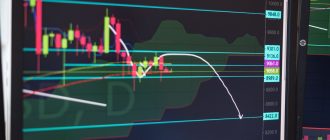
Markets are repricing risk fast. From EUR/USD swinging around key technical levels to the S&P 500 testing range highs, traders are asking the same question: is this the start of a sustained breakout or just another false signal before the next volatility wave?
The answer is rarely found in a single headline. It is found in how currencies, equities and bond yields are moving together. This article breaks down the macro drivers, the specific setups on the radar and the risk rules that separate disciplined traders from reactive ones.
Why Stock and Forex Markets Are Repricing Together
Stock and FX markets do not operate in separate worlds. When central banks adjust rate expectations, the impact flows through currency pairs, equity valuations and commodity prices almost simultaneously. That is why a shift in Federal Reserve or European Central Bank guidance can create momentum across multiple asset classes in a single session.
Interest Rate Differentials Are Driving FX Flows
In forex, money tends to move toward currencies with stronger real yields. When one central bank signals patience while another hints at tightening, the yield gap widens and the higher-yielding currency often attracts capital. This dynamic has kept major pairs such as EUR/USD and GBP/USD sensitive to every inflation print and labor market report.
- Hawkish surprise: A central bank leaning toward higher rates can lift the domestic currency.
- Dovish surprise: A cautious tone can weaken the currency and boost export-heavy equity sectors.
- Mixed signals: When policymakers disagree, expect choppy two-way price action.
Equity Sectors React to the Same Macro Pulse
Stock traders should watch the same macro pulse. Rate-sensitive sectors such as technology and real estate tend to react sharply to changing yield expectations, while financials and energy may benefit from a different inflation backdrop. Understanding this rotation helps traders avoid fighting the broad market trend.

Three Setups Traders Are Watching Right Now
Rather than chasing every tick, many active traders are focusing on a small number of high-conviction setups where the technical picture and macro story align.
1. Dollar Pairs Testing Key Range Edges
The US dollar has been oscillating near multi-week range boundaries. A confirmed break above resistance in the dollar index could pressure EUR/USD toward the lower end of its range, while a rejection could trigger a sharp unwinding of long-dollar positions. The setup is clear: wait for the close, not just the intraday poke.
2. Index Breakouts Backed by Volume
Breakouts without volume often fail. Traders are watching whether benchmark equity indices can hold above previous resistance with expanding participation. A volume-backed push may support trend continuation, while a low-volume drift above resistance increases the risk of a bull trap.
3. Commodity-Linked FX as a Sentiment Proxy
Pairs such as AUD/USD, USD/CAD and NZD/USD are being used as a real-time gauge of global risk appetite. When commodity prices strengthen and these currencies rally, it often signals improving demand expectations. When they stall, it can be an early warning that the risk-on move is fading.
Risk Management for the Next Volatility Wave
Volatility is not the enemy; poor position sizing is. A strong setup can still produce a losing trade, which is why professional traders define their exit before they enter.
- Set a stop based on structure: Place stops beyond the swing high or low, not at an arbitrary distance.
- Scale into conviction: Start with a smaller size and add only when the trade proves itself.
- Watch correlations: If you are long stocks and short a risk-sensitive currency, you may be taking the same trade twice.
- Respect the calendar: Major rate decisions and employment reports can widen spreads and trigger stop runs.
Positioning for the Week Ahead
The most practical conclusion is simple: trade the reaction, not the rumor. Headlines create noise, but price action, volume and correlation tell you whether institutions are truly repositioning. Build a watchlist around the dollar pairs, major indices and commodity-linked currencies, then let the market confirm before you commit capital.
Review your open positions, tighten risk on crowded trades and keep dry powder for the moments when volatility creates clean, high-quality entry points. In trading, patience is not passive — it is part of the edge.