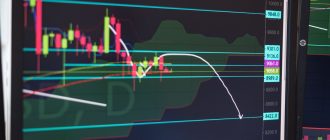
Are you capitalizing on the wild price swings, or are they wiping out your portfolio? With the VIX hovering near multi-month highs and currency pairs like EUR/USD seeing 100-pip daily ranges, the current landscape demands a fresh approach. Volatility isn’t a threat—it’s the lifeblood of profitable trading. Here’s how to turn uncertainty into a strategic edge.
Key Drivers Behind 2025’s Market Turbulence
Before diving into tactics, understand what’s fueling the action. Central bank divergence, geopolitical tensions, and shifting growth narratives are creating a perfect storm for traders.
Central Bank Policy Divergence
The Federal Reserve’s cautious stance contrasts sharply with the ECB’s and BoJ’s moves. When the Fed pauses but the ECB cuts, the EUR/USD pair becomes a battleground. Watch interest rate differentials—they’re the silent driver of forex trends.
Geopolitical Flashpoints
From tariff escalations to energy supply disruptions, headlines are moving markets faster than ever. Equity indices like the S&P 500 can swing 2% intraday on a single tweet. Traders who ignore geopolitics are trading blind.
Recession Fears vs. Soft Landing Hopes
Mixed economic data keeps sentiment on a knife-edge. ISM manufacturing misses but consumer spending holds up. This ambiguity creates sharp reversals in stock sectors—tech, energy, and defensive stocks—which can rotate violently.

Proven Strategies for High-Volatility Environments
Here are three actionable tactics that work when the VIX is above 20 and currency ATRs are elevated.
Breakout Trading with Volume Confirmation
In choppy markets, false breakouts are common. Add a volume filter: only enter when price breaks a key level and volume spikes at least 50% above its 20-period average. For forex, use the ATR (Average True Range) to set wider stops and avoid premature exits.
- Identify key levels: Prior day’s high/low, weekly pivots, or round numbers.
- Wait for the break: Don’t anticipate—confirm with a 15-minute close beyond the level.
- Check volume: On stocks, use OBV (On-Balance Volume) for divergence-free entries.
Mean Reversion on Extreme RSI Readings
When panic or euphoria pushes RSI(14) below 20 or above 80 on the daily chart, the snapback can be swift. This works best on major forex pairs and liquid large-cap stocks. Pair with a short-term trend line break for entry timing.
Carry Trade Adjustments in a Rate-Cut World
With rates falling, traditional carry trades (long high-yield, short low-yield) are crumbling. Instead, look for commodity-linked currencies like AUD and CAD, which benefit from rising raw material prices, or use a basket approach to hedge single-currency risk.
Risk Management: The Only Edge That Matters
None of these strategies survive without ironclad risk rules. In 2025’s environment, position sizing is more critical than entry timing.
- Risk no more than 1% per trade on volatile days; scale down to 0.5% when the VIX > 30.
- Use correlated stops: If you’re long USD/JPY and short EUR/USD, you might be doubling your USD exposure.
- Hedge tail risks with out-of-the-money put options on the SPY or call options on the VIX when your equity portfolio is heavily long.
Conclusion: Adapt or Get Left Behind
The traders who will thrive this year are those who embrace volatility as a tool, not a hazard. Sharpen your technical analysis, stay informed on macro shifts, and rigorously manage risk. The market isn’t random—it’s a reflection of collective fear and greed. Learn to read it, and you’ll find opportunity in every headline.
Ready to put these strategies into action? Open a demo account and start practicing risk-defined trades on our platform today.