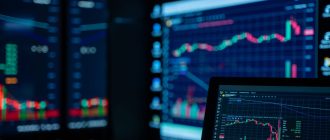
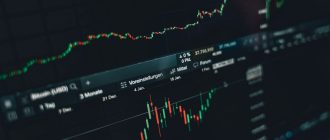
Did you know that over 70% of all trades in the U.S. stock market are now executed by algorithms? The rise of artificial intelligence and machine learning has transformed the trading floor from a chaotic pit of shouting brokers to a silent data center humming with predictive models. As we move further into 2025, the fusion of AI and finance is not just a trend—it’s the new reality for stocks, forex, and beyond.
The Unstoppable Rise of AI-Powered Trading
Algorithmic trading is nothing new, but the sophistication of modern AI has catapulted it into uncharted territory. Hedge funds and institutional investors now deploy deep reinforcement learning models that continuously adapt to market conditions. These systems analyze millions of data points—from satellite images of retail parking lots to real-time social media sentiment—to predict price movements with uncanny accuracy.
Key Drivers Behind the AI Boom
- Explosion of alternative data: AI thrives on non-traditional datasets like web scraping, credit card transactions, and IoT sensor outputs.
- Cheaper computing power: Cloud GPUs and specialized AI chips have lowered the barrier to entry, enabling smaller firms to compete.
- Speed and emotionless execution: AI can react to news headlines in microseconds, eliminating human bias and hesitation.
What This Means for Retail Traders
For the everyday investor, the dominance of AI might seem like an unfair advantage. However, the same technology is trickling down to retail platforms. Many brokerage apps now offer AI-driven insights, automated portfolio rebalancing, and smart alerts. But caution is warranted: over-reliance on AI signals without understanding the underlying logic can lead to catastrophic losses during black swan events.
How to Leverage AI Without Losing Control
Consider using AI as a supplementary tool rather than a complete autopilot. For example, AI-based scanners can help identify potential forex breakout patterns or undervalued stocks, but final entry and exit decisions should incorporate your own risk management rules. Always backtest any AI strategy on historical data, and never risk capital you can’t afford to lose.

The Regulatory Crossroads: Who Watches the Machines?
Regulators worldwide are scrambling to keep pace. The U.S. Securities and Exchange Commission (SEC) has proposed new rules requiring AI trading systems to undergo rigorous explainability audits. Similarly, the European Securities and Markets Authority (ESMA) is pushing for real-time monitoring of algorithmic activity. The biggest concern? A feedback loop where multiple AIs, all trained on similar data, amplify market volatility in a crisis—a digital flash crash waiting to happen.
Ethical Dilemmas and Market Fairness
Beyond stability, there’s the question of fairness. If a handful of tech giants control the most advanced trading AIs, does that entrench inequality? Some propose open-source AI frameworks for public use, but the genie is already out of the bottle. The debate will only intensify as we approach 2026.
Forex Markets: AI’s New Frontier
While stocks have been the primary playground for AI, the $7.5 trillion-a-day forex market is catching up. AI excels at parsing macroeconomic indicators and central bank rhetoric across multiple currencies simultaneously. Natural language processing models can digest ECB or Fed statements and adjust positions on EUR/USD or GBP/JPY within milliseconds. For manual forex traders, this means tighter spreads but also fiercer competition.
Adapting Your Forex Strategy
To stay ahead, combine technical analysis with AI-generated economic sentiment scores. Some platforms now offer AI-powered correlation matrices that reveal hidden relationships between currency pairs. For instance, AI might detect that AUD/USD is increasingly sensitive to Chinese commodity demand, a nuance easily missed by traditional models.
Conclusion: Embrace the Bot, But Stay Human
The AI revolution in trading is not about man versus machine; it’s about man with machine. The most successful traders in 2025 will be those who harness AI’s processing power while retaining human judgment. Keep learning, stay skeptical of black-box solutions, and remember that markets are ultimately driven by human emotion—something no algorithm can fully replicate. Ready to elevate your trading? Start incorporating AI tools gradually, and always prioritize risk management.